
 Rated Excellent With Over 500 Combined Trusted Reviews – 30 Days Money Back Guarantee* – FREE UK Delivery
Sleep is often the first thing we sacrifice when life gets busy. Late nights, early mornings, screen time, stress — it all adds up. But what many people don’t realise is that sleep isn’t just “rest”… it’s one of the most important foundations of your overall health.
In fact, getting enough quality sleep can impact everything from your energy levels and mood to your immune system and long-term wellbeing.
Let’s break down why sleep really matters — and why it deserves more attention than it gets.
The Real Impact of Poor Sleep (With Statistics)
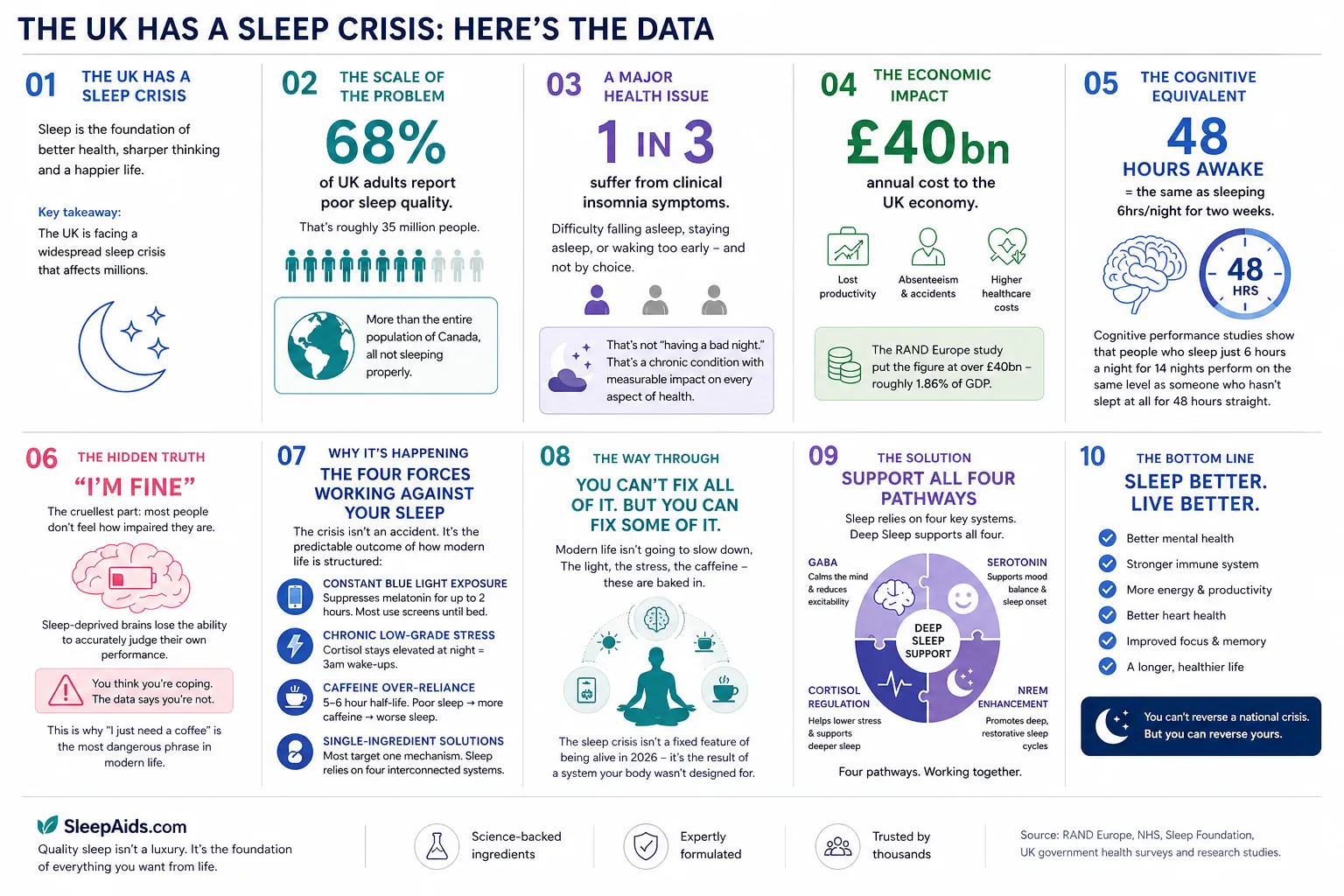
Sleep problems are far more common than many people realise.
- Around 30% of adults in the UK report poorer sleep quality
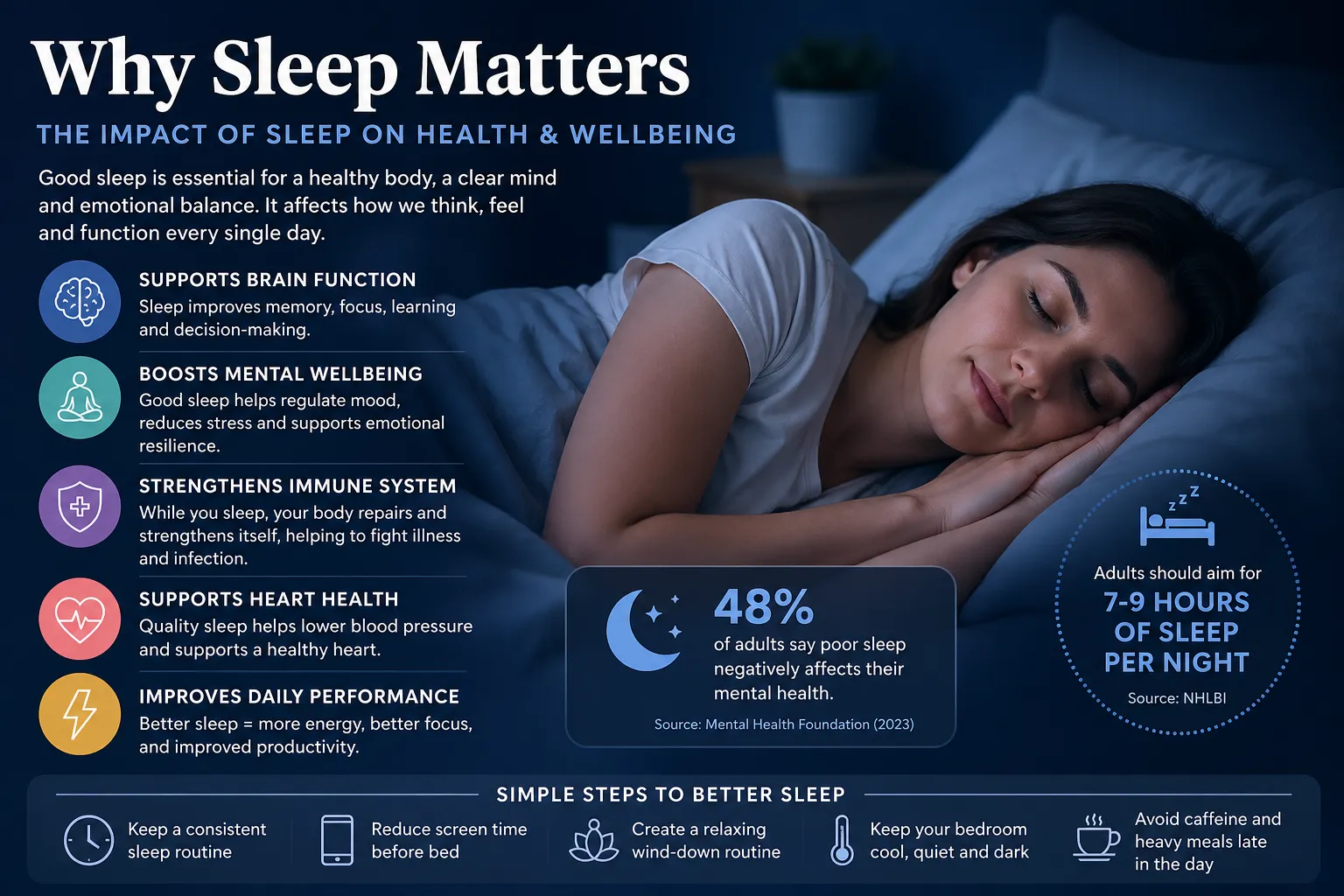
- 48% of adults say poor sleep negatively affects their mental health
These numbers highlight a growing issue. Many people are living with sleep problems that directly impact their wellbeing.
Sleep Is When Your Body Repairs Itself
While you sleep, your body isn’t switching off — it’s getting to work.
This is the time when:
- Muscles recover
- Cells repair and regenerate
- Hormones rebalance
Think of sleep as your body’s overnight reset system. Without enough of it, your body simply doesn’t get the chance to properly recover from the day.
It Plays a Key Role in Brain Function
Sleep is essential for how your brain works.
During the night, your brain:
- Processes information from the day
- Strengthens memory
- Clears out waste products
That’s why poor sleep often leads to:
- Brain fog
- Difficulty concentrating
- Slower reaction times
Ever noticed how everything feels harder after a bad night’s sleep? That’s not a coincidence.
Sleep Affects Your Mood More Than You Think
Sleep and mental wellbeing are closely linked.
When you don’t sleep well, you’re more likely to feel:
- Irritable
- Stressed
- Overwhelmed
On the flip side, good sleep helps you feel:
- More balanced
- More resilient
- Better able to handle daily challenges
In simple terms — sleep helps you cope better with life.
Your Immune System Depends on It
Your immune system relies heavily on sleep to function properly.
While you sleep, your body produces and releases substances that help:
- Fight infection
- Reduce inflammation
- Support recovery
Consistently poor sleep can make you more vulnerable to illness and slow down how quickly your body bounces back.
It Supports Energy and Daily Performance
This is one of the most noticeable effects.
When you sleep well, you:
- Have more energy
- Think more clearly
- Perform better physically and mentally
When you don’t, everything feels like more effort.
That’s why sleep is often the missing link when people feel constantly tired — even if they’re eating well or exercising.
Sleep Helps Regulate Your Internal Clock
Your body runs on a natural rhythm, often referred to as your sleep–wake cycle.
This cycle controls:
- When you feel alert
- When you feel tired
- How well you function throughout the day
Factors like late nights, stress, and screen time can disrupt this rhythm — making it harder to switch off when you actually want to sleep.
It Impacts Long-Term Health
Sleep isn’t just about how you feel tomorrow — it also affects your long-term health.
Consistent sleep patterns are linked to:
- Better overall wellbeing
- Improved daily functioning
- More stable energy levels
Over time, small improvements in sleep can lead to big improvements in how you feel day to day.
So… How Much Sleep Do You Actually Need?
Most adults need around 7–9 hours of sleep per night.
But it’s not just about quantity — quality matters just as much.
A consistent routine, reduced screen time before bed, and a calm environment can all make a big difference.
Simple Ways to Improve Your Sleep Routine
If you’re looking to improve your sleep, start small:
- Go to bed at the same time each night
- Reduce screen time before bed
- Create a relaxing wind-down routine
- Keep your bedroom cool and dark
Some people also choose to incorporate supplements from brands like Natrol or OLLY as part of their routine, depending on personal preference.
Sleep isn’t a luxury — it’s a core part of your health.
It affects how you feel, how you think, and how your body functions every single day.
The good news? Even small improvements in your sleep routine can make a noticeable difference.
Better sleep = better energy, better mood, better overall health.