
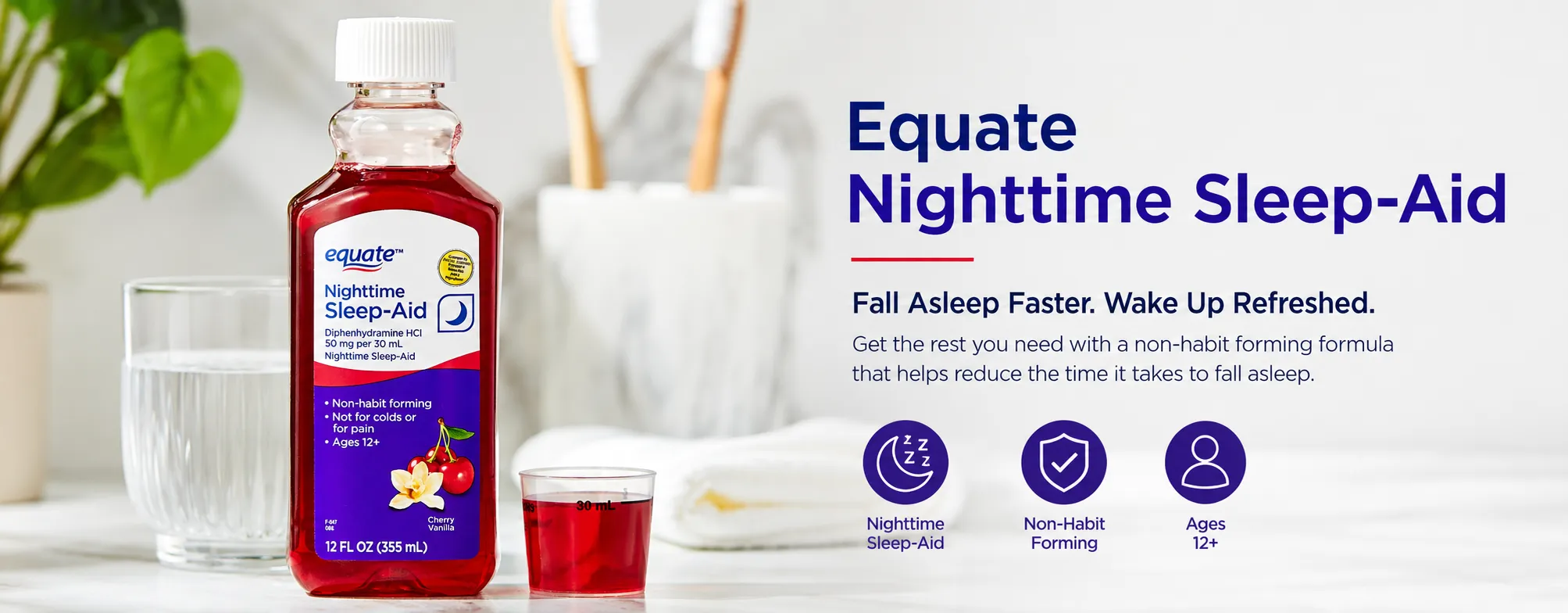
There are few things more frustrating than feeling tired all day, only to get into bed and suddenly find yourself wide awake.
Most of us experience the odd bad night. Maybe you’ve been travelling, your normal routine has gone out of the window, you’ve had too much on your mind or sleep simply isn’t happening as easily as it normally does.
When people start looking for something to help, tablets and capsules are usually the first products that spring to mind. But they’re certainly not the only option.
Liquid sleep aids have become an increasingly popular alternative, particularly for people who don’t like swallowing tablets or simply prefer something they can measure and take shortly before bed.
But there’s an important point to understand before buying one: not all liquid sleep aids are the same.
Some contain antihistamines such as diphenhydramine. Others contain melatonin. You’ll also find herbal drops containing ingredients such as valerian root, as well as ready-to-drink nighttime shots containing combinations of different ingredients.
So, what’s the difference – and what should you actually look for?
Let’s take a closer look.
What Is a Liquid Sleep Aid?
The name is fairly self-explanatory. A liquid sleep aid is simply a nighttime or sleep-support product supplied as a liquid rather than a tablet, capsule, softgel or gummy.
What isn’t so straightforward is what’s actually inside the bottle.
Two products sitting next to each other might both be described as nighttime liquids, yet contain completely different ingredients and be designed for different purposes.
That’s why it’s always worth turning the bottle around and reading the ingredient panel rather than choosing based on the words “sleep aid” alone.
Depending on the product, you may come across ingredients such as:
- Diphenhydramine HCl
- Melatonin
- Valerian root
- Botanical extracts
- Amino acids and other nighttime ingredients
- Combination formulas containing pain-relief ingredients
Understanding the active ingredients is arguably the most important part of choosing between them.
Why Do People Choose Liquid Sleep Aids?
Sometimes it simply comes down to convenience.
Not everyone enjoys swallowing tablets, particularly larger caplets and capsules. A flavoured liquid can feel easier to take, while droppers allow relatively small quantities of liquid to be measured.
There are also plenty of people who already take several tablets or supplements during the day and simply don’t want another pill at bedtime.
Liquid products can offer a few practical advantages:
They’re easy to take.
For anyone who struggles with tablets, this is probably the biggest attraction.
They’re easy to measure.
Many products include a measuring cup or dropper.
There’s plenty of choice.
Liquid doesn’t describe one particular type of sleep aid. There are antihistamine liquids, melatonin liquids, botanical drops and sleep shots.
Some are alcohol-free.
If avoiding alcohol is important to you, there are specifically formulated alcohol-free nighttime liquids available.
They’re available in different formats.
You can choose anything from a traditional bottle kept in the medicine cupboard to a small sleep shot that’s convenient for travelling.
The Main Types of Liquid Sleep Aid
This is where shopping for a liquid sleep aid can become confusing.
Rather than asking, “What’s the best liquid sleep aid?”, a better starting point is:
“What type of product am I actually looking for?”
Here are some of the main categories you’ll encounter.
1. Diphenhydramine Liquid Sleep Aids
If you’ve looked at American nighttime sleep products before, you’ve probably come across diphenhydramine HCl.
Diphenhydramine is an antihistamine that causes drowsiness and is used as the active ingredient in a number of over-the-counter nighttime sleep aids intended for occasional sleeplessness.
Brands such as Vicks ZzzQuil and Equate offer liquid formulations containing diphenhydramine.
These tend to be the products people have in mind when they think of a traditional liquid nighttime sleep aid.
They’re very different from nutritional supplements, however, and shouldn’t simply be treated as something to add permanently to your nightly routine.
Always follow the directions and warnings on the individual product.
2. Liquid Melatonin
Melatonin is another ingredient you’ll frequently encounter when looking at sleep products, particularly those originating in the United States.
Our bodies naturally produce melatonin. It plays an important role in regulating our internal body clock and sleep-wake cycle.
Supplemental melatonin is available in numerous formats internationally, including tablets, gummies and liquids.
One advantage of the liquid format is that it provides an alternative for people who don’t want another tablet before bed.
For example, Natrol produces a berry-flavoured liquid melatonin alongside its better-known tablets and gummies.
There is, however, an important distinction for UK shoppers.
Melatonin is regulated differently in the UK than it is in the United States. Don’t assume that because a product can be bought freely from an American shop that exactly the same rules apply here.
If you’re unsure whether melatonin is appropriate for you, speak to a doctor or pharmacist.
3. Herbal and Valerian Sleep Drops
Not everyone looking for nighttime support wants melatonin or an antihistamine.
This is where botanical liquid products come in.
Valerian root is one ingredient you’re likely to encounter. It has a long history of traditional use and is commonly found in relaxation and nighttime products.
Rather than a large bottle of flavoured liquid, these products can come in small bottles with droppers.
MaryRuth’s, for example, produces organic valerian root liquid drops.
The important thing here is not to assume that “natural” automatically means a product is suitable for everyone. Herbal ingredients can still interact with medicines and may not be appropriate in certain circumstances.
Always check the label.
4. Ready-to-Drink Sleep Shots
This is probably the most unusual format if you’ve only ever used traditional tablets.
Sleep shots are small, ready-to-drink bottles designed to provide a convenient single serving.
Products such as Dream Water fall into this category.
One obvious advantage is portability.
Rather than taking a full-sized bottle and measuring cup with you, a small shot can be easier to pack for a hotel stay, long journey or holiday.
It’s still important to look at what’s actually inside the shot, though. These products may contain several ingredients, so compare the formula rather than focusing solely on convenience.
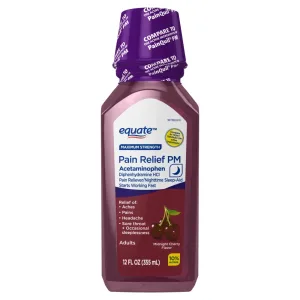
5. Nighttime Pain Relief Liquids
Here’s another distinction that’s easily missed.
A nighttime pain-relief liquid isn’t necessarily the same thing as a standard sleep aid.
Some products combine a nighttime ingredient with a pain reliever such as acetaminophen.
These are designed for situations where occasional minor aches or pains are accompanied by sleeplessness.
If you don’t require pain relief, there’s little sense in choosing a combination product simply because the word “nighttime” appears on the bottle.
It’s another good example of why reading the active ingredients matters.
What About Alcohol-Free Sleep Aids?
It’s worth checking this specifically because liquid nighttime formulas aren’t automatically alcohol-free.
Some traditional liquid products contain alcohol as an inactive ingredient, whereas others have been specifically formulated without it.
If you would rather avoid alcohol, look for the words “Alcohol Free” on the packaging and confirm this in the product information.
For example, both Equate and Vicks ZzzQuil have alcohol-free nighttime liquid options within the current SleepAids.com range.
How Do You Choose the Right Liquid Sleep Aid?
With so many products available, it’s tempting to compare them purely on price.
We wouldn’t recommend doing that.
A £15 bottle and a £25 bottle might contain completely different ingredients, different strengths and a different number of servings.
Instead, ask yourself a few simple questions.
What is the active ingredient?
Start here.
Is it diphenhydramine? Melatonin? Valerian? A blend of ingredients?
Once you know this, comparing products becomes much easier.
What strength is it?
Don’t assume that two bottles containing the same ingredient have the same strength.
Look at the amount per serving, not simply the total size of the bottle.
How much do I take?
Check the recommended serving size.
A 12 fl oz bottle doesn’t necessarily provide twice as many servings as a 6 fl oz bottle because the recommended serving could be different.
Does it contain alcohol?
If this matters to you, specifically choose an alcohol-free formulation.
Is it intended for adults?
Never assume that an adult sleep aid can simply be given in a smaller quantity to a child.
Children’s products have their own formulations, age restrictions and directions.
Does it contain anything else?
This is especially important with combination nighttime products.
A formula may also contain a pain reliever or several additional ingredients.
Liquid Sleep Aid vs Tablets: Is One Better?
Not really.
It mostly comes down to what you prefer and, more importantly, the formulation you’re looking for.
Some people love the simplicity of taking one tablet with a glass of water. Others dislike swallowing pills and would choose a liquid every time.
If you’re travelling, tablets may be more convenient because there’s no risk of a bottle leaking in your luggage.
On the other hand, if you struggle with tablets, a flavoured liquid or a few drops may be much easier.
So rather than asking which format is “best”, think about which format you’re actually most comfortable using correctly.
Are Liquid Sleep Aids Fast Acting?
You’ll sometimes see liquid products marketed around convenience or speed, but be careful about assuming that a liquid automatically works faster simply because of its format.
How a product affects you depends on several factors, including its active ingredients, formulation, dosage and individual response.
Follow the manufacturer’s instructions about when and how the product should be taken rather than taking additional doses because you haven’t noticed an immediate effect.
Can You Take a Liquid Sleep Aid Every Night?
This is another area where the ingredient matters.
Products containing sedating antihistamines such as diphenhydramine are generally intended for occasional sleeplessness, not as a long-term answer to persistent sleep problems.
Other products and supplements will have their own recommended directions.
If you’re regularly struggling to sleep, it’s better to investigate what’s causing the problem rather than simply relying on a nighttime product indefinitely.
Poor sleep can sometimes be related to stress, lifestyle, caffeine, alcohol, medication, your sleeping environment or an underlying health issue.
Persistent sleep problems are worth discussing with a healthcare professional.
Don’t Forget the Basics
It’s easy to focus on what’s inside a bottle when you’re desperate for a good night’s sleep.
But the boring advice is often surprisingly useful.
Try going to bed and waking at roughly the same time each day. Avoid large amounts of caffeine late in the afternoon or evening. Give yourself some time away from your phone before trying to sleep.
Make the bedroom dark, quiet and comfortably cool.
And perhaps most importantly, don’t start clock-watching if you wake during the night. Staring at 2:47am on your phone and calculating exactly how many hours you have left before the alarm rarely makes getting back to sleep any easier.
We’ve all done it.
So, Which Liquid Sleep Aid Should You Buy?
There isn’t one answer that will suit everybody.
If you’re comparing liquid sleep aids, concentrate on the formulation rather than the front of the bottle.
Look at:
- The active ingredient
- Strength per serving
- Recommended serving size
- Number of servings
- Alcohol content
- Age restrictions
- Additional active ingredients
- Manufacturer directions and warnings
Then decide whether a traditional nighttime liquid, melatonin liquid, botanical drop or ready-to-drink shot is the format you’re actually looking for.
Taking an extra minute to compare the labels can make the choice much clearer.
Explore Liquid Sleep Aids
At SleepAids.com, you can compare a growing selection of liquid nighttime products from brands including Vicks ZzzQuil, Equate, Natrol, MaryRuth’s, Zarbee’s and Dream Water.
The collection includes traditional nighttime liquids, alcohol-free options, liquid melatonin, valerian drops and convenient sleep shots, giving you several different formulations and formats to compare.
Browse our full Liquid Sleep Aids range to compare ingredients, strengths, bottle sizes and product types before deciding which option is right for you.
Always read the label and follow the manufacturer’s directions and warnings. If you have persistent sleep difficulties or are unsure whether a particular product is suitable for you, speak to a doctor, pharmacist or other qualified healthcare professional.